Busy sailing weekend ahead
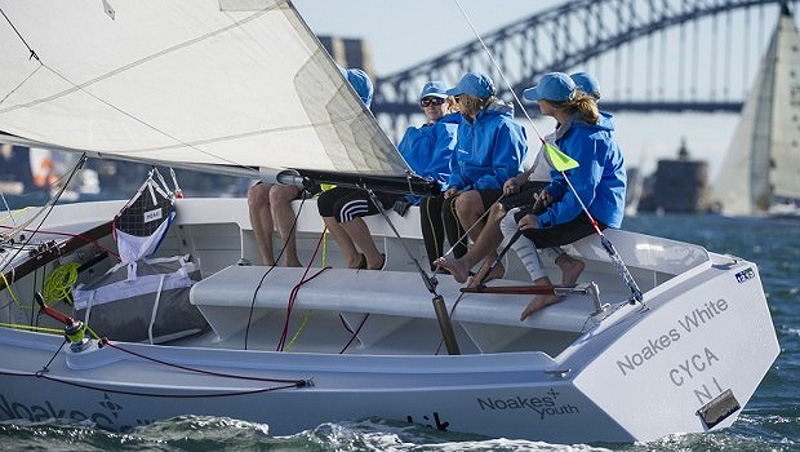
The series that was too fun to stop continues Friday. The six race White Cap Series had a possible make up race scheduled for this Friday. All six races were run, the series scored and completed, but no one could think of a reason not to have a race this Friday (May 17). Look for a dock start.

Over 20 multihulls, from hot little Weta tri's to the Formula 40, DRAGON, are scheduled to be racing in PT this weekend. A number of them are looking for crew for a Protection Island race on Saturday, and in-shore bay races on Sunday. The skipper's meeting will be at 8 AM on Saturday under the marina facing porch by the Shanghai and Pt Hudson Cafe. If you'd like to crew, that's where you should be, too.

Clean and Green Boating Products 101: non-zinc anodes

Spring time is coming and with it a haul out and time to get your boat ready for the year. For many of us that means making hard choices: balancing a desire to use more environmentally friendly products against the need to protect our boat from the sea’s ability to quickly degrade it. The problem is that many of the tried and true materials work because of their toxicity – for instance Trinidad SR with its high copper content – and many of the new non-toxic products have not proven to work very well. Aluminum anodes MAY be an exception, a product that works better than traditional zinc anodes and is safer for the marine environment. From the Seattle based Clean Boating Foundation.

anode02a

The Clean Boating Foundation is often asked by boaters about products they can use to reduce their environmental impact while enjoying their boat and the beautiful waters of Puget Sound.  The three major responses are: cleaning supplies, non-copper bottom paint and aluminum/magnesium anodes.  Let’s talk today about anodes.

What are anodes?  They’re sacrificial lumps of metal attached to the bottom of your boat to prevent the wasting of the good metals of your boat (hull, shaft, propeller, etc) through galvanic corrosion.  Basically, the anode corrodes before the boat does, saving you costly repairs and headaches – anodes are a good thing.  Heard of Zincs?  Zincs are anodes.  But anodes don’t necessarily have to be zinc.

In fact, even though zinc has been the choice metal in traditional marine anodes for years, there are more effective and environmentally preferable (and sometimes less expensive) choices out there.  The problem with zinc anodes, besides the fact that zinc itself is dangerous to the marine environment when it corrodes away into the water (it is actually regulated in Washington’s NPDES industrial and boatyard permits), is that they require cadmium as an activator for the galvanic protection process.  Cadmium is an extremely toxic metal, regulated at the federal level.  Bad stuff.


continue reading » Clean and Green Boating Products 101: non-zinc anodes

Marine Battery Types and Charging Tips

Story by Peter d’Anjou, from Boat Trader
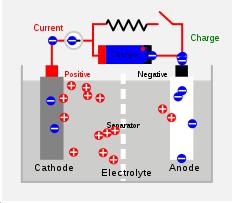
battery-charging-diagramMost boats under 50 feet in length have 12-volt electrical systems. Yet many experienced boaters can’t tell you much about the batteries they have on board, let alone how their batteries and charging systems work. Take my buddy Jeff, for instance. It’s the middle of the season and one of the two 12-volt batteries on his 30-foot sailboat is nearing the end of its life. When I asked Jeff, an engineer by trade and an experienced boater, what kind of battery he was choosing to replace the old one, he blithely said, “Oh, a cheapo X-mart wet cell.” Clearly driven by short-term economics, my friend may not have realized that batteries using the same charging system should be replaced in sets.

There’s a lot to know about marine batteries. I’ve written briefly about them before in Lay-up Tips, but now I realize a primer on batteries would be helpful. Modern day conveniences such as laptop computers and cell phones using lithium ion batteries have contributed much to the knowledge and design of batteries since Gaston Plante initially invented the lead-acid battery in 1859.  However, marine batteries, especially the wet-cell kind, are still in the relative dark ages of battery design.

battery smart regulator

A smart multi-step regulator can sense charge, adjust to the batteries’ charging phase, and optimize longevity. A smart regulator with optional temperature sensor sells for $275 at West Marine.

They are purpose-built and their internal structure will reflect their use—starter, deep-cycle, or dual-purpose—as well as their limitations.   For instance, a battery designed for starting your engine will typically have more internal plates closer together, providing more surface area to give that higher, one-time discharge required in powering a starter motor, but will not be as good at the long, steady discharge that deep-cycle batteries, with thicker active plates and higher antimony concentrations give. Deep-cycle batteries can be discharged from 50 to 80 percent and recover easily, while starting batteries don’t like to be discharged more than 50%.

Chemical Types:

Marine batteries are available in three chemical types: Flooded, Gel, and Absorbed Glass Mat (AGM).  Regardless of chemical type, they’re rated by energy output, generally expressed as ampere hours, and categorized by how many charges (cycles) the
continue reading » Marine Battery Types and Charging Tips

Seattle Boat Show, Jan 25 to Feb 3

Check with Lisa at PTSA sponsor PT Rigging who has a very limited number of tickets available.
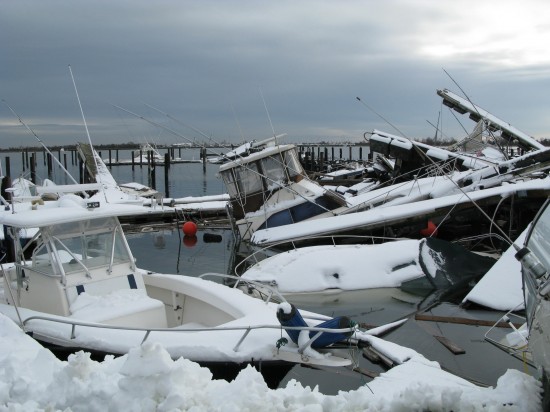
Superstorm Sandy damages more than 65,000 boats

Record-high surge levels caused hundreds, if not thousands, of boats stored at low elevations to drift away. Photo courtesy of BoatUS

This doesn’t bode well for anyone, including those of us who write a yearly check for boat insurance. From Three Sheets Northwest.

Nov 15 2012 in Currents by Deborah Bach

More than [...]

What’s your boat look like from underwater?

Here is a interesting concept, Roth Diving Services, one of our club sponsors, has set up the ability to do on the spot videos, for inspecting everything from zincs, props, rudders, hulls, anything you may want inspected and captured on video. I plan a haulout to repaint the bottom on the one week off we [...]